This case file traces the journey from finding stolen designs to uncovering how marketplaces respond—sometimes inadequately. It raises a larger question: as technology accelerates, what will protecting creators look like in the future?
Here’s the breakdown:
1. The Discovery
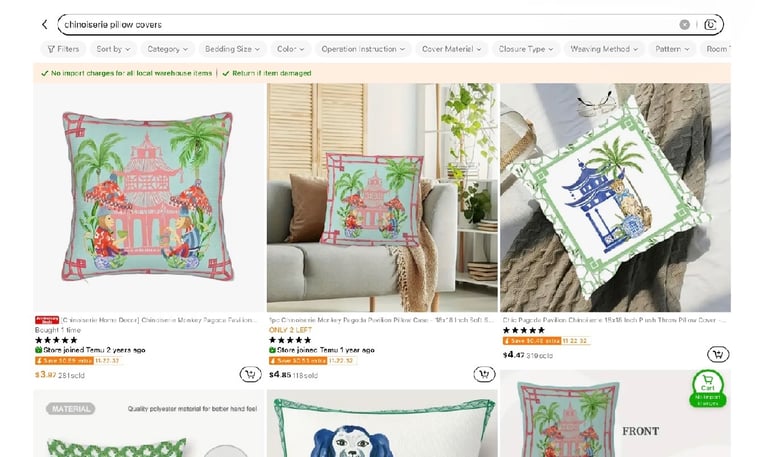
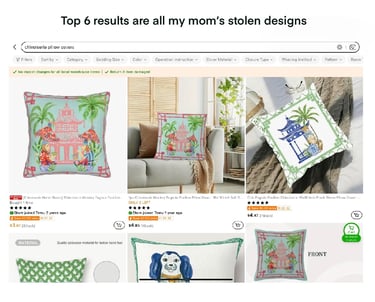
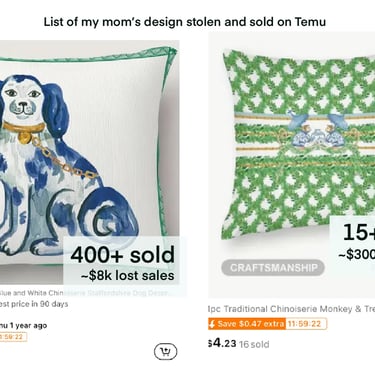
A single keyword search on Temu told the story: the first six pillow covers shown were all stolen designs from my mom.
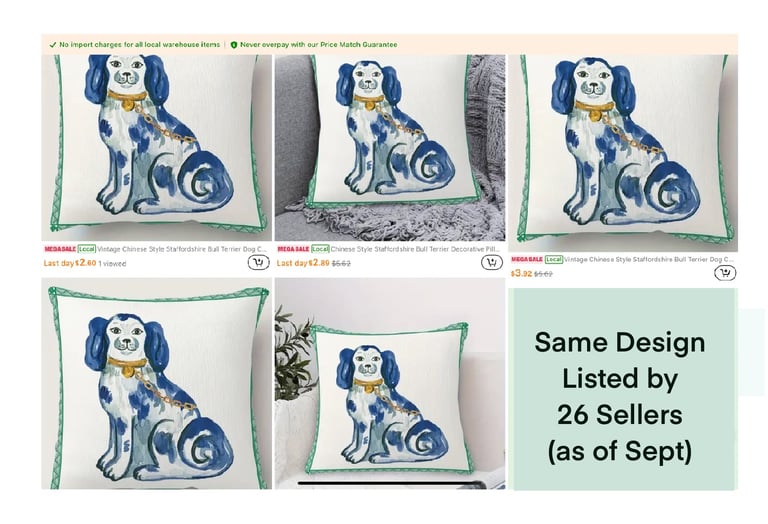
One of those designs didn’t just appear once — it was copied into 26 different listings by different sellers, multiplying the theft across the platform.
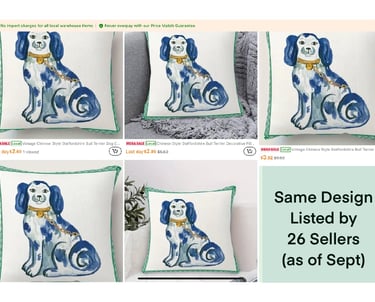
Case File
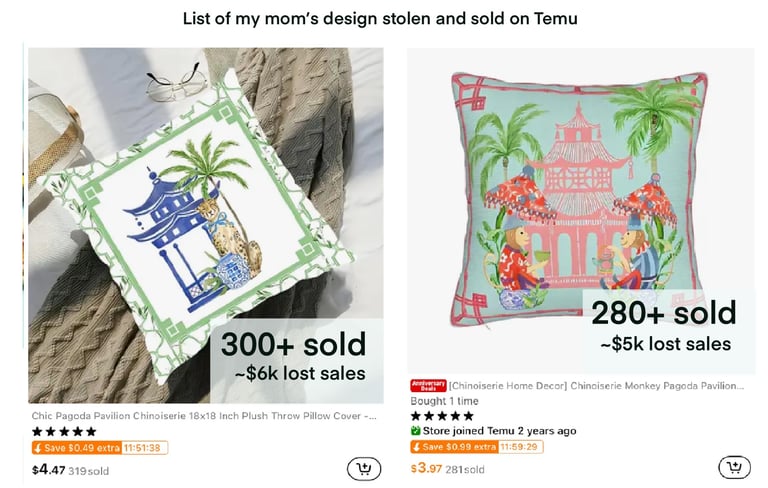
2. The Sales
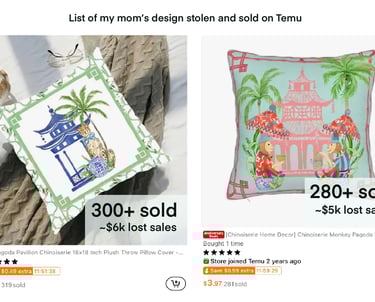
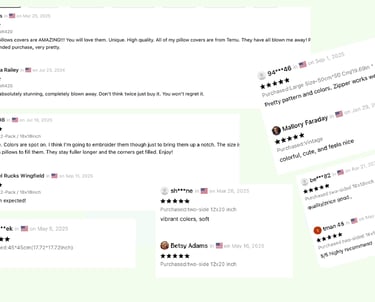
Sales counts, reviews, and “bestseller” tags show how widely these designs were sold and how profitable stolen art can become.
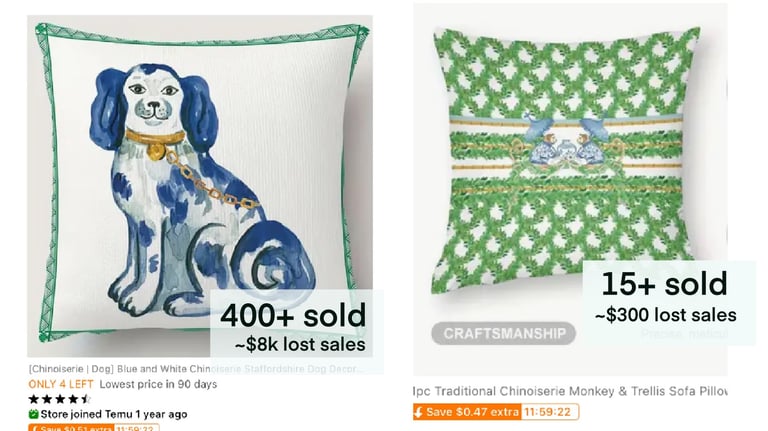
3. The Sellers
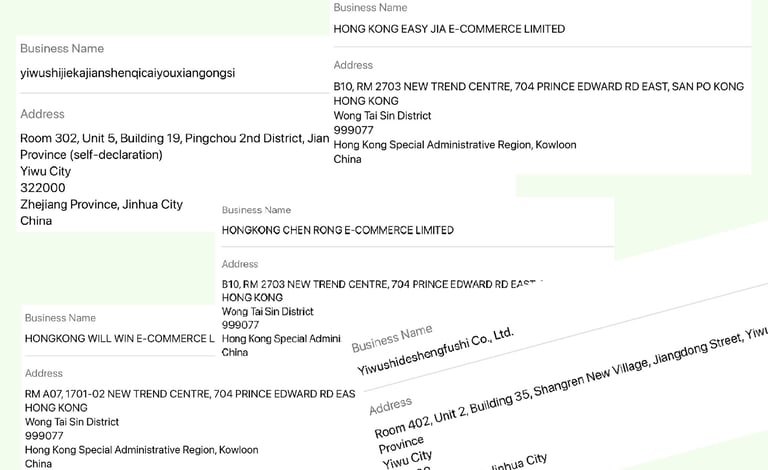
These are some of the vendor pages behind the listings, showing names and locations of their business.
4.The Buyers
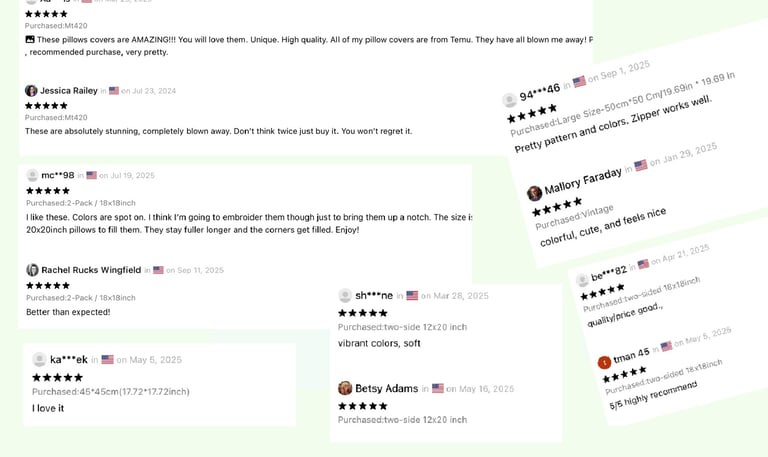
A large share of Temu’s customers come from the United States, drawn in by the platform’s steep price advantage. For many, the decision isn’t about where the design comes from, but about getting something that looks stylish at a fraction of the cost. I observed tons of positive reviews on the products
5.The Products
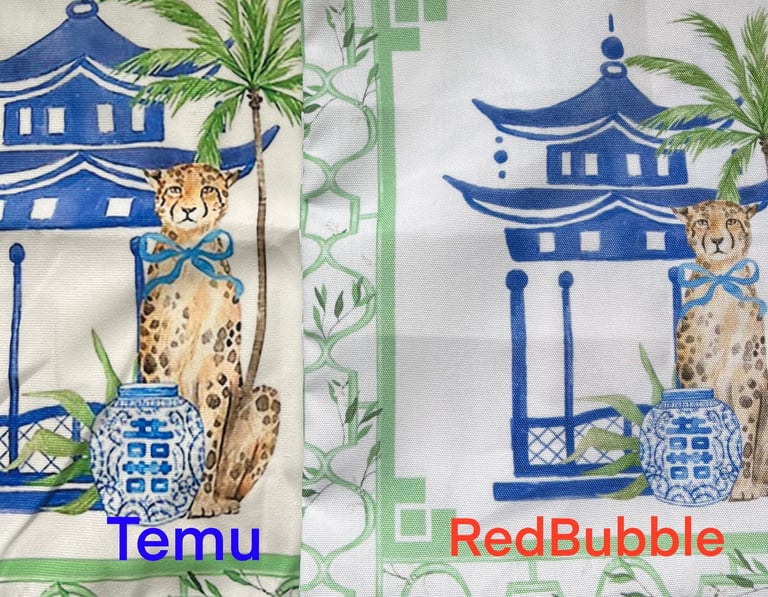
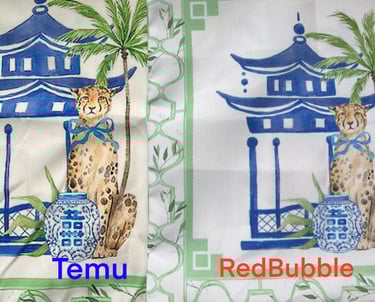
The knockoff pillows on Temu use an off-white base fabric with fairly neat stitching, but the cutting and edges aren’t straight, leaving them slightly crooked. Still, the print is clear, the fabric feels solid, and the overall construction looks good enough that most buyers likely overlook these flaws.
6.The Platforms
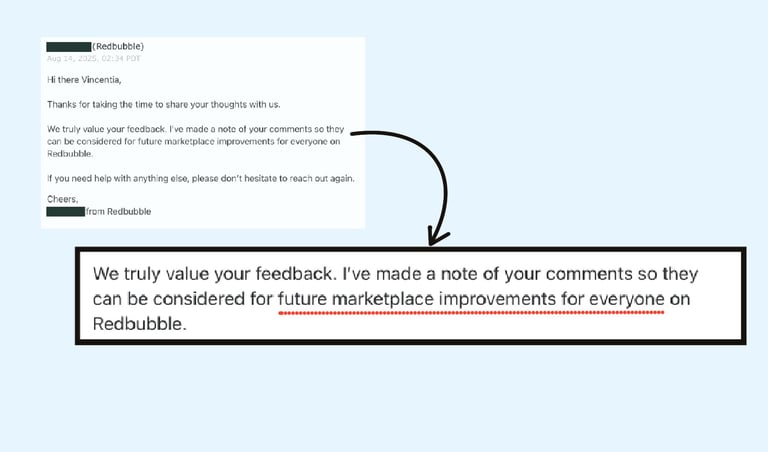
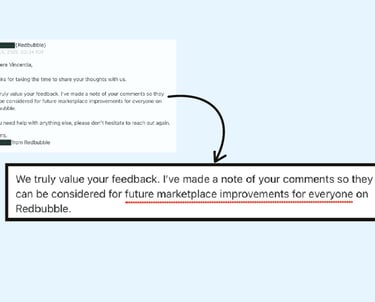
Temu responded quickly to takedown requests. RedBubble, by contrast, was slow to respond. It took multiple emails over the course of months to finally get a response that they will consider my suggestion for randomized watermark in future IP upgrades.
Every pillow in this case file points to a broken system: designs stolen from independent artists can dominate marketplaces, rack up sales, and undercut the originals, not because they’re better, but because platforms let it happen. Temu looks the other way, while RedBubble’s weak watermarking leaves artists exposed in the first place. The result? A cycle where consumer demand fuels theft, and creators are left unprotected.
7.The Takeaways
Join Us
Championing Creators’ Rights in the Digital Age
Get in touch
info@guardmyart.com
© 2025. All rights reserved.